Pepper talks to his daughter about
the wonders of immunization. Along the way, he teaches her about the
fascinating story of vaccination.
Dear Paprika,
Today, I read an article about anti-vacciners who are against vaccinating their children, “
Under fire, vaccine deniers defend their choice”.
They talked about how vaccines could cause autism in children, and harm
their kids because vaccines are made from diseases and thus not
foolproof. They also talked about how they are protecting their children
from harm by “boosting their immune system” with home remedies and self
medication.
I shook my head in disbelief when I read the article, never thinking for once this would happen in our country’s modern society.
I first heard of people speaking against vaccines a few years ago, after I watched a video of a cheerleader named
Desiree Jennings who claimed a flu vaccination caused her to develop a neurological disorder. In the
video,
you can see she has lost her ability to walk normally except when
walking backwards! Her story soon became the reason for rejecting
vaccinations. Long story short, it was a sham.

Sweets and lollipops for everyone later! | Source: unicef.org
The story of vaccination is a fascinating one. Take smallpox as an
example. For thousands of years, there was no way to prevent it. People
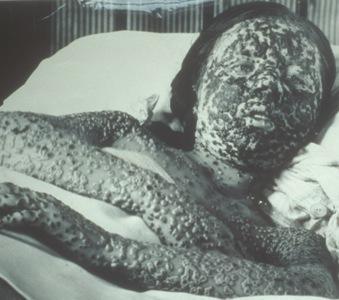
afflicted with the deadly smallpox developed red spots all over their
body which would leave deep scars when they healed. Some even died from
this disease. Nicknamed “speckled monsters”, everyone was afraid of
contracting smallpox. Europeans conquering South America spread the
disease there, while Africans brought to Europe as slaves spread it
there. The disease was highly contagious and there was little anyone
could do to stop it.
Edward Jenner,
a doctor, once overheard a milkmaid who boasted that she would never
get smallpox because she had had cowpox. Cowpox was a mild version of
the smallpox. In 1796, Jenner took pus from a milkmaid who was suffering
from cowpox and inoculated an 8 year old boy. The boy fell sick at
first but soon got better. Later, when Jenner inoculated the boy with
fresh smallpox, the boy did not develop the deadly disease! The boy had
become immune to smallpox.
Immunisatin works by tricking the body.
A mild or harmless version of a deadly disease is injected into a
person. Our body’s natural immune system responds by producing
antibodies to attack the disease. After that, it “remembers” how to
fight the disease the next time it meets it again. Clever, right?
Now you know why you fall sick after being vaccinated; your body is just taking time to fight the disease. Yes, there is
a minute chance complications could develop;
a small group of people may be allergic to it but for 99.9% of us,
there are almost zero risks. You see, before vaccines are approved,
they undergo rigorious clinical trials.
They are tested thousands of times over many years. Viruses mutate all
the time and scientists work hard to find new vaccines to immunize
people and stop the spread of diseases. Besides, your medical history is
usually taken into consideration before you are vaccinated.
Some anti-vacciners argue, “Why take the risk at all?” Well, there is
a risk you could die from crossing the road but we still do it every
day.
More accidents happen in our own homes than anywhere else! We take risks every day of our lives. On the contrary, the benefits of vaccination far outweigh the risks.
Some anti-vacciners argue that vaccines contain harmful chemicals like formaldehyde and mercury. Yes, they do. These
chemicals are used to preserve and stabilise the vaccines.
The amounts used are very small! When was the last time you heard of
someone dying from an overdose of formaldehyde or mercury poisoning
after being vaccinated? Here are some fun facts: a tuna sandwich
contains 5 times more mercury than the flu vaccine. An infant
breastfeeding from 6 months old receives 25 times more mercury than the
flu vaccine.
If you think that is bad, did you know the US FDA allows a 24-ounce
container of cornmeal to have up to 13 insects, 745 insect fragments and
27 rodent hairs in it? Yum! Even fresh vegetables are handled by many
dirty hands, endure transportation from farm to market and spend hours
in unsanitized places waiting to be bought by us. But a quick wash under
tap water and we happily eat it without a second thought!
My point is, our bodies can handle such hazards without any problems.
The craziest argument against vaccination has to be “it is a tool
used by the government to control the population”! Malaysia is spending
RM16 billion on health care for the
rakyat this year. Does that sound like a government that is out to harm its
rakyat via its health care?

A speckled “smallpox” monster | Source: jennermuseum.com
Disease outbreaks usually happen when too many people refuse to be
vaccinated, allowing a disease to move easily through them, jumping from
one person to another.
Here is how my friend Dr Kok Sen Wai explains it,
“Germs are spread from one person to other people –
that’s how these germs survive, making us sick as they go along.
Vaccination turns people immune to these germs, and the more people in
our community get vaccinated, the higher the herd immunity. If herd
immunity is high, even when one non-vaccinated person falls sick, he is
surrounded by vaccinated persons so that the germs cannot be as easily
passed on to non-vaccinated persons.
We have people who cannot be vaccinated, like newborn babies and
those on whom vaccines don’t work because their immune systems don’t
work properly. Herd immunity protects those people. When lots of people
don’t vaccinate, the herd immunity goes down and germs can easily be
passed between them, causing outbreaks. People who rely on the herd
immunity to protect them would fall sick due to the bad decisions of
people who do not vaccinate – while at the same time these selfish
people benefit from the herd immunity they refuse to contribute to.”
After all is said and done, don’t listen to quacks and
self-proclaimed experts; listen to Dr Kok Sen Wai, a real medical doctor
who spends his day curing sick people, “When you decide to vaccinate,
you are not just protecting yourself. You are also helping to protect
others at the same time.”
Dear Paprika, you and your brother have been vaccinated and immunised
against multiple diseases. When you were a year old, you fell sick and
we noticed red spots on your face. I called Auntie Su Lin who is a
pediatrician. I asked if it was measles. She replied that it was
impossible for you to contract measles as you had already been
vaccinated and there was no outbreak of measles in Peninsular Malaysia.
Thank you, vaccination!
If I meet a parent with concerns about vaccinating their children, I
would try to reason with them as one parent to another – who wants only
the best for our children – to trust the doctors who had to endure 5
years of expensive medical school and the subsequent few years as
medical housemen to serve their fellowman. Trust the doctor, as he is
looking out for your best interests. Immunize your children for their
own sake.
Uncle Sen Wai (who is also a father-to-be) told me this interesting
story. Dr. Ooi Mong How, one of the foremost paediatricians in our
country and an expert on virally transmitted diseases, has this story he
likes to tell: He was contacted by the Ministry of Health regarding a
mysterious illness that had infected an entire rural village in Sarawak.
People broke out in spots, pinkeye, cough and breathing problems – and
the sickest, youngest and eldest patients died from it. So, they sent
him down there to investigate and the moment he arrived, he recognised
that mystery illness as something he used to see very commonly when he
was a junior doctor – it was measles!
Measles has been so well prevented by vaccination that nowadays, we
run the danger of younger, newer doctors (who have never seen it before
in all their life and practice) fail to recognise a disease that older
generations of doctors were able to diagnose at first sight. The
outbreak occurred in that community because hardly anyone in it was
vaccinated, so herd immunity was low and the measles virus spread like
wildfire across the village.
The moral of that story is two-fold: One, vaccination is so effective
that measles – a once common disease – is now so rare that many doctors
can go through their careers without seeing even a single case. Two,
when people do not vaccinate and herd immunity is low, the results can
be fatally devastating.
Your loving father,
Daddy
This was written by Pepper Lim and edited by Dr Kok Sen Wai.